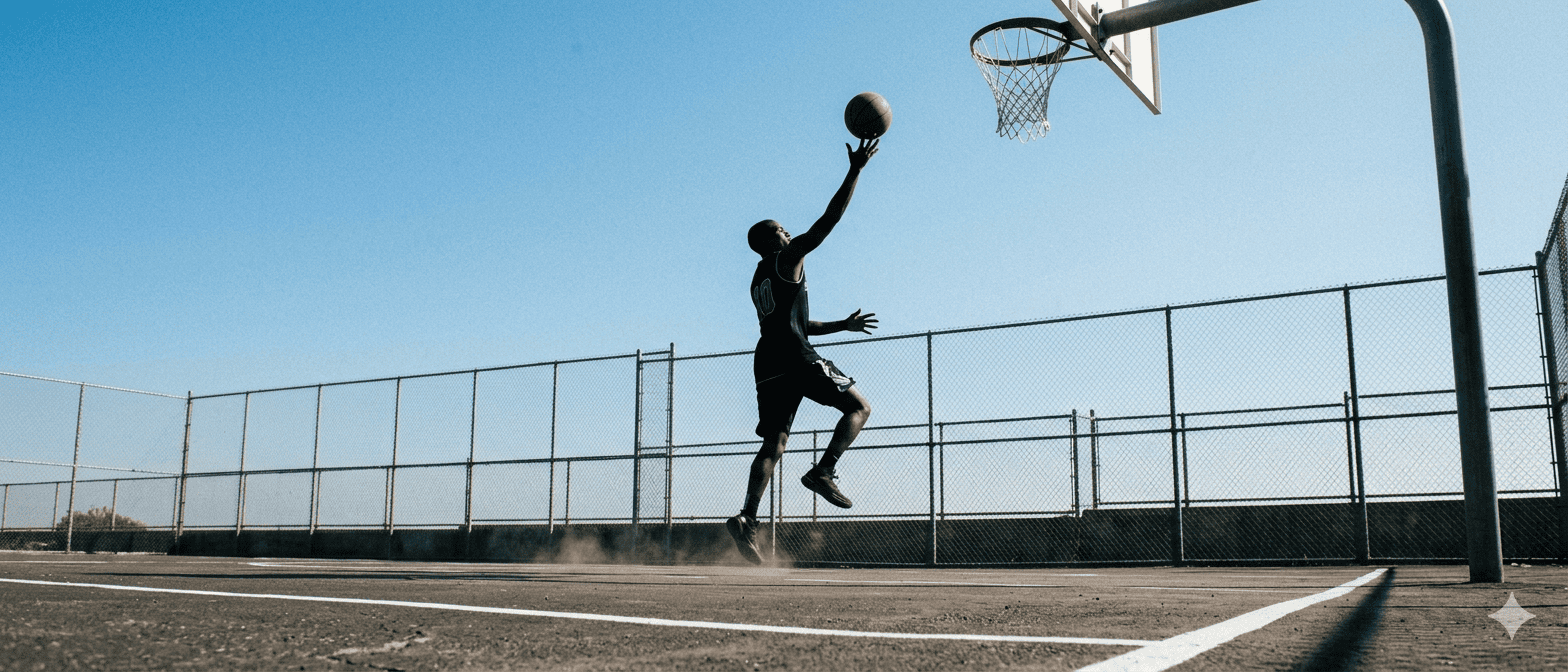
Basketball is a high-octane sport defined by its constant movement, verticality, and the melodic rhythm of a ball hitting a polished floor. Since its humble beginnings in a Massachusetts gymnasium, it has grown into a global phenomenon that blends individual flair with complex team choreography.
From Peach Baskets to Arenas: The Origin Story
Unlike many sports that evolved over centuries, basketball has a very specific “birthday.”
- The Invention: In December 1891, Dr. James Naismith, a Canadian physical education instructor, was looking for a way to keep his students active indoors during the harsh New England winters.
- The First Equipment: He nailed two peach baskets 10 feet high to the balcony railings of the Springfield College gym and used a soccer ball.
- Evolution of the Net: Originally, the baskets had closed bottoms, meaning a janitor had to climb a ladder to retrieve the ball after every score! It wasn’t until 1906 that open-ended metal hoops with nets became the standard.
How the Game Works: The Essentials
Basketball is played by two teams of five players on a rectangular court. The objective is simple: shoot the ball through a hoop while preventing the opposing team from doing the same.
Scoring Breakdown
- Three-Pointer: Any basket made from beyond the large arc (the three-point line).
- Two-Pointer: Any basket made from inside the arc during active play.
- Free Throw: Worth one point, awarded after certain fouls. The player shoots from a designated line while the clock is stopped.
Key Rules to Know
- Dribbling: Players must bounce the ball while moving. If they stop and then start again, it’s a “double dribble” violation.
- Traveling: Taking more than two steps without dribbling the ball.
- The Shot Clock: In professional and most collegiate play, teams have a limited amount of time (24 or 30 seconds) to attempt a shot, keeping the game fast-paced.
The Anatomy of a Team: The Five Positions
While modern basketball is becoming more “positionless,” the traditional roles still define the strategy:
- Point Guard (PG): The “floor general.” They handle the ball and call the plays.
- Shooting Guard (SG): Usually the team’s best long-range shooter.
- Small Forward (SF): A versatile player who can score from the outside and play physical defense.
- Power Forward (PF): Typically plays near the basket (the “paint”) to rebound and score close-range shots.
- Center (C): Usually the tallest player, responsible for blocking shots and dominating the area under the hoop.
Why Basketball is a Global Powerhouse
What makes basketball so special? It’s arguably the most accessible sport in the world.
- Minimal Gear: All you truly need is a ball and a hoop, which can be found in almost any public park.
- Physical Benefits: It is a full-body workout that improves cardiovascular health, coordination, and “vertical explosion” (jumping ability).
- Star Power: The NBA (National Basketball Association) has turned players like Michael Jordan, LeBron James, and Steph Curry into global icons, making the sport a massive influence on fashion, music, and pop culture.
Getting Started: Tips for Beginners
If you’re looking to pick up a ball for the first time, focus on these three fundamentals:
- The “BEEF” Method for Shooting: Balance, Elbow in, Eyes on the rim, and Follow-through.
- Keep Your Head Up: When dribbling, try to look at the court, not the ball. This helps you see your teammates.
- Defensive Stance: Stay low with your knees bent and arms wide. Defense is all about effort and positioning!
Whether you’re playing a game of “HORSE” in the driveway or watching a buzzer-beater in the finals, basketball offers an energy that is hard to match.
Would you like to learn more about the specific physics of the “backspin” on a shot, or are you interested in the greatest dynasty teams in NBA history?