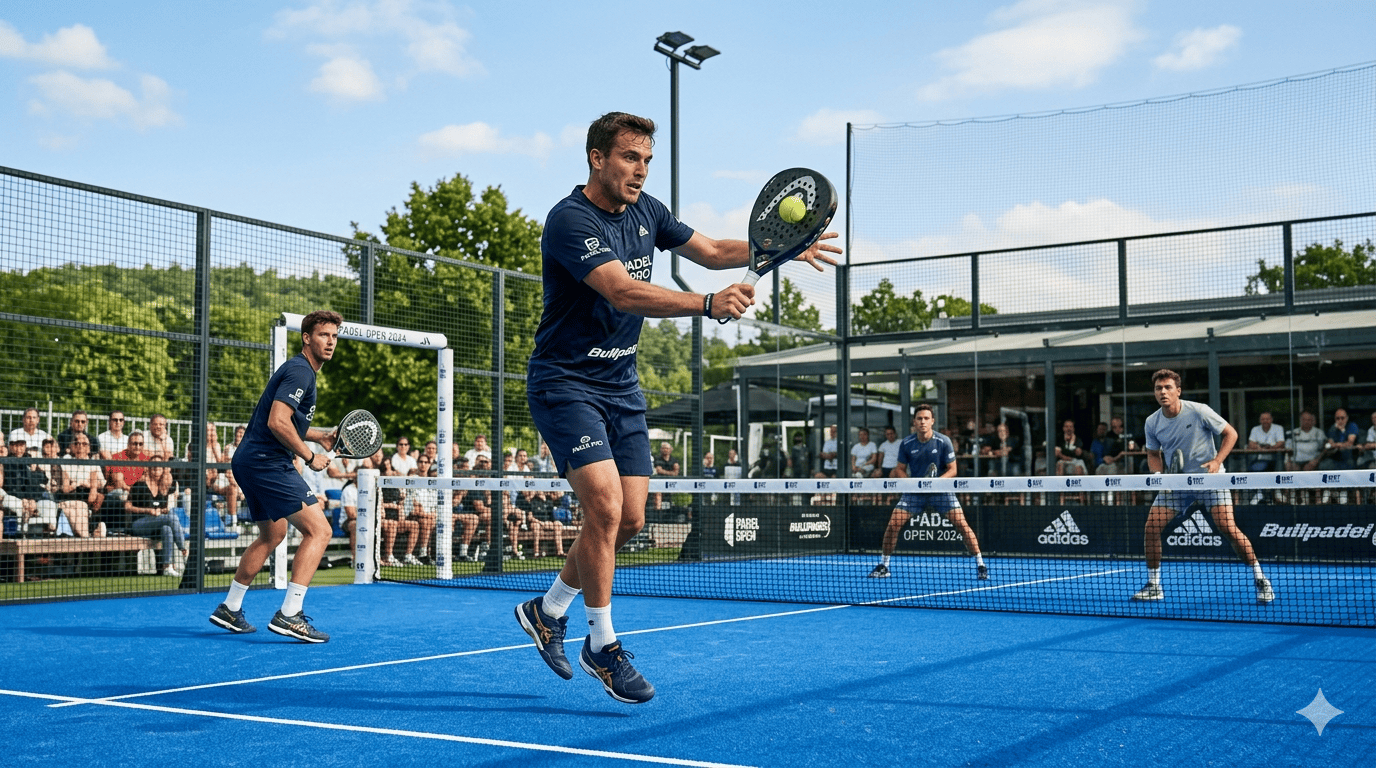
Imagine a sport that combines the fast-paced action of tennis with the strategic wall-play of squash—all played in a high-energy, social doubles format. That is Padel, and as of 2026, it has officially transitioned from a “rising trend” to a dominant global force in the sporting world.
The Unlikely Origin Story
Padel wasn’t born in a professional stadium, but in a private backyard.
- Invented in 1969: Enrique Corcuera, a tennis enthusiast in Acapulco, Mexico, lacked the space for a full-size tennis court.
- A Creative Solution: He built a smaller court (roughly one-third the size of a standard tennis court) and enclosed it with walls to keep the ball in play.
- Global Explosion: While it first took deep root in Spain and Argentina, the sport has skyrocketed to over 35 million players across more than 150 countries as of 2026.
How to Play: Rules and Mechanics
Padel is designed to be accessible, rewarding strategy and positioning over raw power.
The Court and Scoring
- The Enclosure: The court is surrounded by glass and mesh walls. Players can hit the ball after it bounces off their own walls to return it over the net.
- Familiar Scoring: Padel uses the same “15-30-40” scoring system as tennis. Matches are typically the best of three sets.
- The Serve: All serves are underarm, hit at or below waist level, and must land in the opponent’s diagonal service box.
Wall Play
The ball must hit the ground on the opponent’s side first before hitting a wall. If it hits the wire mesh or glass directly without bouncing first, it is considered “out”.
Essential Gear for Beginners
You don’t need much to get started, but the right equipment makes a significant difference.
- The Padel Racket: Unlike tennis rackets, these are solid, stringless, and perforated with holes. Beginners should opt for a round shape for better control and a larger “sweet spot”.
- Specialized Shoes: Because padel involves constant lateral movement on artificial turf, running shoes are a risk. Padel-specific or clay-court tennis shoes with a herringbone tread provide the necessary grip.
- The Ball: Padel balls look like tennis balls but have lower internal pressure, resulting in a slower, more controlled bounce suitable for enclosed spaces.
Why the World is Obsessed: Health & Social Benefits
Padel’s rapid growth is fueled by its inclusive nature—40% of its player base is female, making it one of the most balanced racket sports.
- Full-Body Workout: A standard match improves cardiovascular health, endurance, and builds speed through constant side-to-side movement.
- Joint-Friendly: The smaller court size and softer balls make it less taxing on joints than high-impact sports like tennis or running.
- Cognitive Boost: The tactical use of walls requires high levels of concentration, cognitive flexibility, and information processing.
- Built-in Community: Because it is almost exclusively played in doubles, the sport is inherently social, fostering teamwork and regular interaction.
Padel in 2026: By the Numbers
The sport’s trajectory is currently outperforming other surging sports like pickleball in global search interest.
- Spain remains the undisputed capital with over 17,300 courts.
- Emerging Markets: Interest is booming in new territories, with search interest rising 121% in the UK and a staggering 887% in Indonesia over the last year.
- The “Lifestyle” Shift: With 14,300 new courts built in 2025 alone, padel is moving beyond clubs and into city rooftops and shopping malls.
Whether you’re looking for a new way to stay fit or a fun activity to share with friends, padel offers a gentle learning curve with endless tactical depth.
Would you like to dive deeper into the specific drills for mastering wall rebounds, or are you interested in the professional tournament circuit for 2026?